You have almost certainly tried some version of this before. The print above the desk. The ring. The wallpaper on the phone. The recurring reminder you set at eleven on a Sunday night in a burst of resolve.
And you have almost certainly watched it stop working, in roughly the same way each time: not a dramatic abandonment, just a gradual fading, until one day you realise you have not actually read the thing in a month.
That is not weakness. It is a well-documented property of attention, and once you understand it the design problem becomes obvious.
Habituation
Nervous systems are built to notice change, not states. A stimulus that repeats without consequence gets progressively less response — this is habituation, and it is among the most basic and best-established findings in the whole of psychology. It is why you cannot feel your clothes, why the hum of a fridge disappears, why people who live by a railway line sleep through the trains.
It applies to meaning as much as to sensation. A sentence you have read three hundred times is not processed as a sentence. Your visual system recognises the shape, confirms nothing has changed, and moves on before the content is retrieved. You can look directly at a poster that says you are going to die and take in precisely nothing.
The object is not failing. It is doing exactly what a stable stimulus does.
Memento Mori
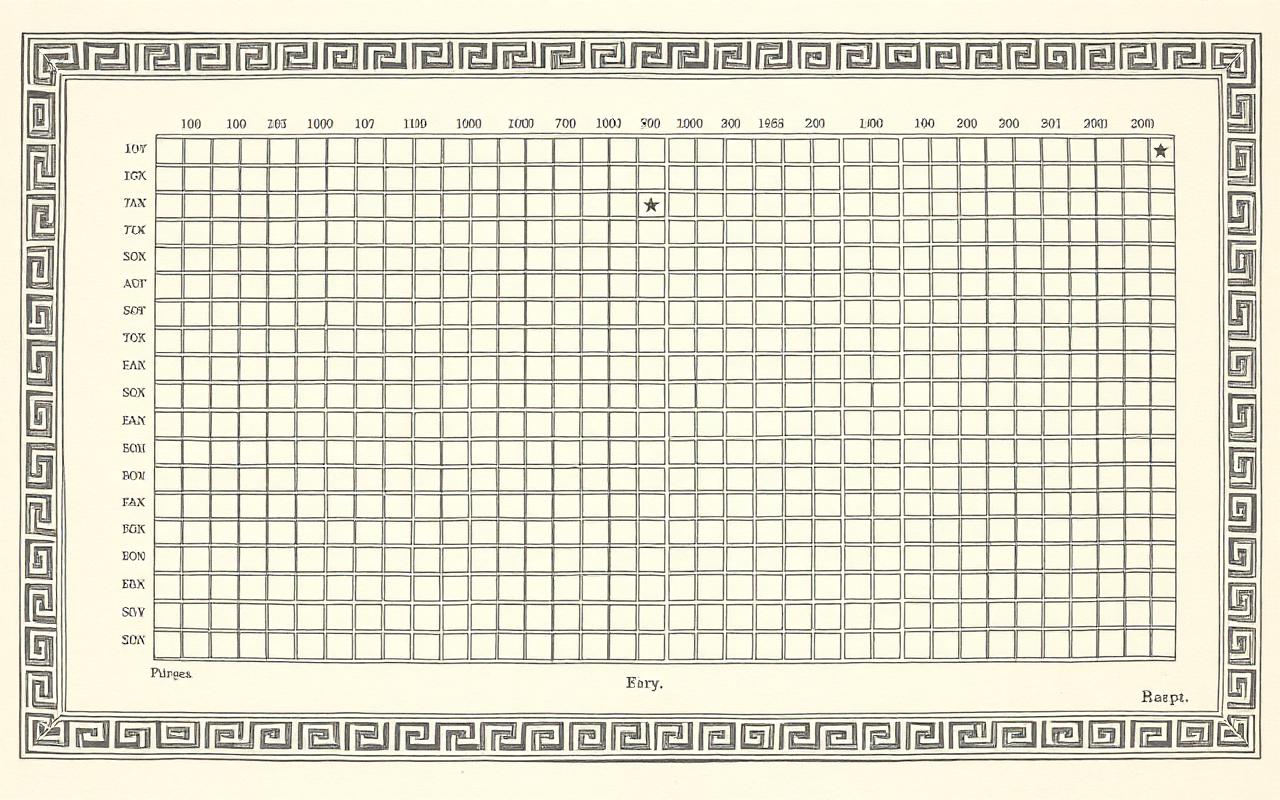
How many weeks have you already lived?
Enter your birthday and see your entire life represented on one page.
Show Me My Life →The three properties that determine survival
Whether a reminder is still working in month six comes down to three things, none of which are the quality of the message.
Rank the usual options against those three and the results are unkind. The poster: predictable, always-present, free to ignore. The ring: same, worse. The self-set phone alarm: predictable content, chosen timing, zero dismissal cost.
- Predictability. If you know what it says before you look, you will stop looking. This is why a reminder you set yourself decays faster than one you did not — you wrote the content, so there is nothing to retrieve.
- Timing you did not choose. A prompt that arrives when you have decided to be receptive catches you already receptive, which is when you least need it. The valuable moments are the ones you would not have selected: the middle of a bad week, the morning of the meeting you should be cancelling.
- Cost of dismissal. Dismissing a notification takes a thumb movement and no decision. If the cost of ignoring something is zero, ignoring becomes automatic within a few weeks — and automatic dismissal is functionally identical to the reminder not existing.
What actually clears the bar
A message you did not write, arriving on a schedule you set months ago. You configured the frequency once; you do not know today's content. That single fact restores most of the unpredictability, which is why an external message outperforms a self-set reminder that says exactly the same words.
A channel that is not saturated. SMS still works partly because most people receive few of them. The moment mortality reflection competes in the same tray as delivery notifications and group chats, it loses, because everything in that tray has been trained to be swiped.
A dismissal that costs something. This is the argument for the voice call, and it is the whole argument.
A ringing phone cannot be glanced at and cleared. You have to make a decision, consciously, in a room, about whether to answer it. And here is the part that matters: even declining it is a successful run of the practice. The person who looks at the screen at 07:14, sees what it is, and presses reject has still been asked the question. There is no equivalent of that for a notification — dismissing a notification requires no engagement with its content at all.
It also uses a different channel. A sentence you read is processed by the same machinery that has been processing text all day. A sentence spoken into your ear, in a voice, before you are fully awake, is not.
The honest counter-argument
Everything above is also a description of something intrusive, and some people will read it and conclude they do not want that. This is a reasonable position, not a failure of resolve.
If unexpected calls make you anxious, do not buy the voice tier. If you have young children and mornings are already chaos, the weekly Sunday message is the better product. If you tried the free version and found you were reading it and acting on it, you do not need the upgrade — the dose is right and adding to it will make it noise.
The upgrade makes sense in one specific situation: you have run the free weekly version for a month, you are aware of it arriving, and you are deleting it without reading. That is not a sign that the practice is wrong for you. It is a sign that the channel has been habituated and the dose is too low to clear the bar.
That is what the paid tiers are for, and it is the only reason I would tell you to buy one.