There is an obvious risk with this one. You give someone a map of their remaining weeks and a system that reminds them they are going to die, and they open it at a table with their family watching.
Done well, it is the gift people still mention two years later. Done badly, it is a small social disaster and a permanent association with your name. The difference is not subtle, and it is almost entirely about occasion and framing rather than the recipient's temperament.
The three conditions
Before anything else, check all three. If any one fails, give something else.
- They are well. Not recently bereaved, not ill, not caring for someone who is dying, not in a depressive episode. This is non-negotiable and it is not a judgement about their resilience — it is that the gift means something completely different in that context, and you do not get to choose which meaning lands.
- They are at a hinge, not in a hole. The gift works for someone facing a decision, a transition, a new decade. It does not work for someone who is stuck, exhausted and unhappy. To the first person it reads as clarifying. To the second it reads as an accusation.
- You have standing. A parent, a sibling, a close friend, a spouse, a mentor. Not a colleague you have known for eight months, not a client, not someone whose inner life you are guessing at.
Occasions where it lands
Milestone birthdays — 30, 40, 50. The strongest occasion by a distance. The person is already doing the arithmetic in their head; the gift meets a thought they are having rather than introducing one. Fortieth is the sweet spot.
Graduation, or a first proper job. Someone standing at the front of a large amount of unallocated time. The framing is opportunity, not scarcity, and at twenty-two it reads as generous rather than grim.
A career change or leaving a job. Especially a voluntary one. They have just made a decision about how they spend their weeks; the gift acknowledges it as exactly that.
A new father. Riskier, and it depends on the person. The version that works is the chapter showing overlap — the roughly 940 weeks a child spends at home, of which the parent has all of them ahead. Framed as time available, not time running out.
A retirement. The good version, when someone is healthy and has plans. Skip it if the retirement is reluctant or health-driven.
Memento Mori
How many weeks have you already lived?
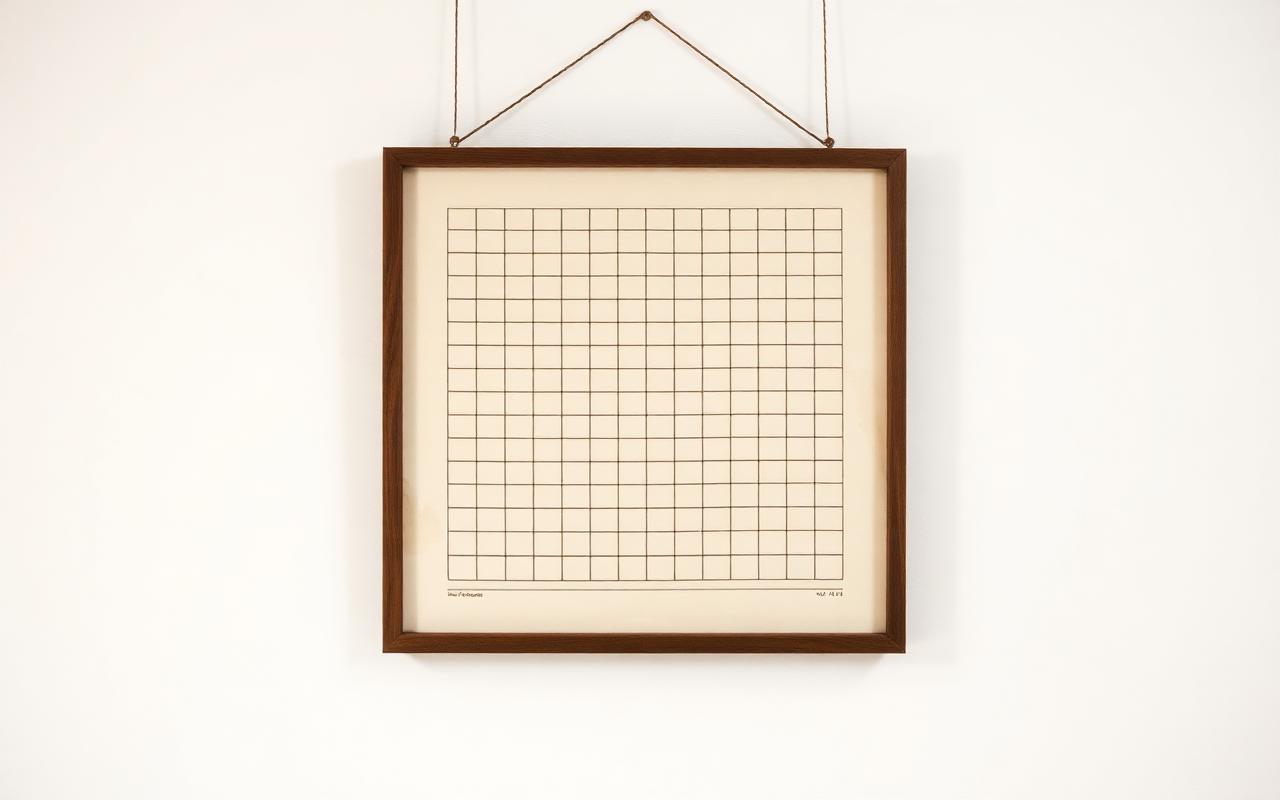
Enter your birthday and see your entire life represented on one page.
Show Me My Life →Occasions where it does not
Christmas, in a pile of other presents, in front of a room. The tonal mismatch is severe and there is no way to explain it in the four seconds you have.
Weddings. The day has enough freight.
Any occasion where they open it publicly and have to produce a reaction on demand. This gift needs a private thirty seconds to make sense.
And — obviously, but it happens — never as a hint. If part of you wants them to get the message about how they are living, do not give this. They will feel it, correctly.
The framing that works
The mistake is presenting it as a gift about death. It is a gift about attention, and the card should say so.
Three that have worked, all short, all avoiding the word entirely:
Not morbid, I promise. Look at it on your own first — I think you'll like what it does.
Forty years down. This is what the rest of it looks like on one page. Thought you'd rather see it than not.
“You said you wanted this decade to count for something. Here's a way to see it.”
Note what all three do: they pre-empt the reaction, they give permission to look at it alone, and they put the emphasis on seeing rather than remembering.
If you are giving it in person, say a version of the same thing out loud as they open it. Eight words of framing prevents the entire failure mode.
How to present it
Give the map first, on its own. It is free, it takes thirty seconds, and it is the part that produces the reaction. Let them have that before anything else arrives.
The subscription is the second half, and it is better delivered as a note than as a purchase they discover. Something like: I've also set up the weekly one for you for a year — the message arrives Sunday mornings. Turn it off whenever you like, there's a button.
That last clause matters more than it looks. A gift that arrives repeatedly, that the recipient did not choose and cannot obviously stop, stops being a gift somewhere around week three. Telling them the off switch exists, unprompted, is what keeps it one.
Practically: use the gift option at checkout rather than buying it on their behalf with their details. They set up their own account, their own dates, their own reminder times, and — importantly — they give their own consent for the messages. You are not signing someone up for texts they did not ask for, which is both bad manners and, in most places, illegal.
The version to buy
For most people the annual weekly reminder is right. It is the one that survives the year without becoming noise, and Sunday morning is the hour when someone actually has thirty seconds to spend on the thought.
Buy the daily tier only for someone who has explicitly said they want it. It is a stronger dose, it suits people mid-decision, and it is the wrong default for a present.
The lifetime option exists for the case where the gift is meant to sit alongside a milestone permanently — a fiftieth, usually. It is the one people frame the card for.